
Class, Clothes, and the Illusion of Choice
Is Vinted for the working class, Vestiaire Collective for the middle class, and The RealReal for the upper class?

When it comes to the second-hand market, we all know it’s a business of its own. From old LV pieces to Zara knit sweaters, it all depends on what you’re searching for. Still, it feels like the market has now split into three distinct audiences, each with its own pricing logic.
Vinted has evolved into a mixed marketplace, especially since it allows users to sell more than just clothes. Vestiaire Collective functions strictly as a fashion marketplace. The RealReal operates in the same space but is clearly positioned on the luxury end of the spectrum.
So what actually separates them?
Here’s a simple breakdown to clarify the structure I’m looking at:
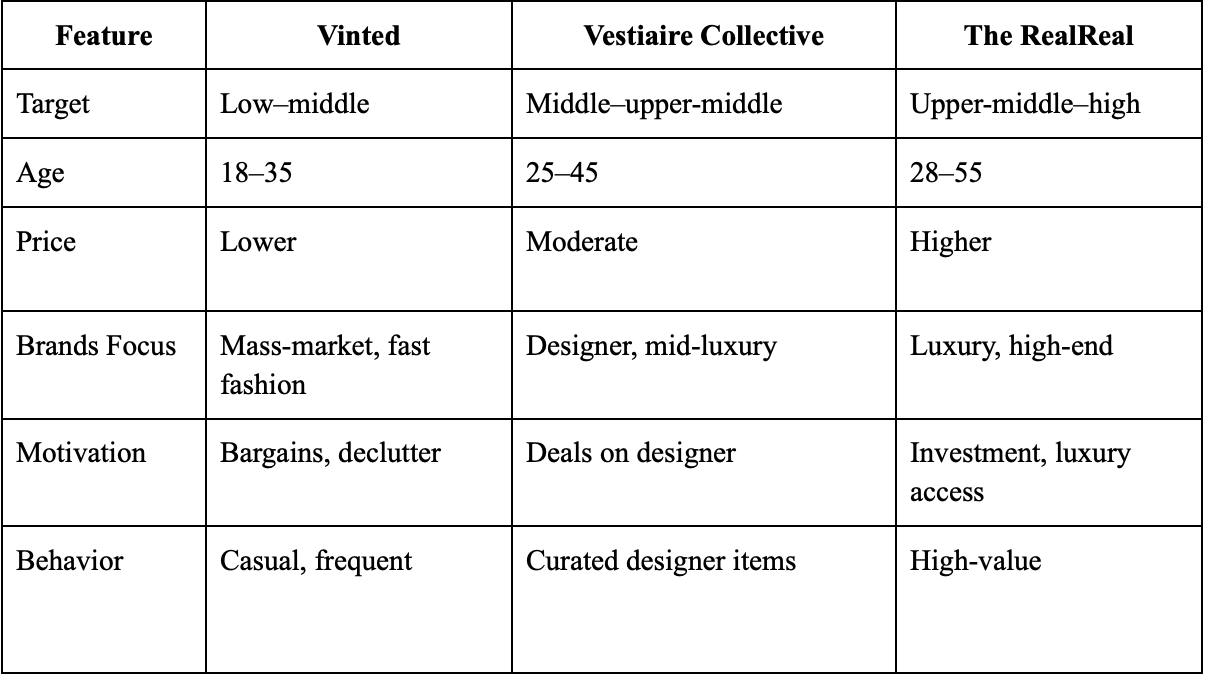
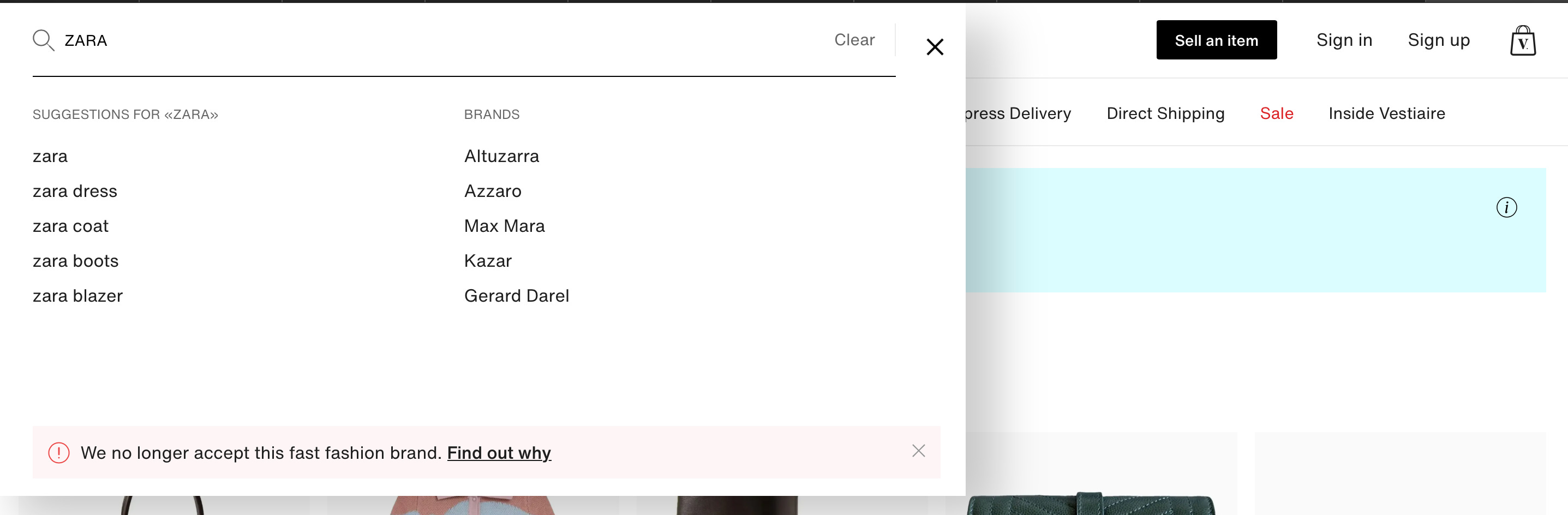
Looking at this consumer segmentation, the differences between each platform become very clear. If you open Vestiaire Collective right now and search for “ZARA,” you won’t find anything. The platform promotes a vision of circular fashion rooted in investing in quality garments rather than fast fashion. As a result, an entire segment of consumers, mainly low-middle class is automatically excluded.
Vinted, on the other hand, sells everything. Any brand. That alone widens its consumer base dramatically. The RealReal, on the other-hand, follows a completely different route, one built around luxury, scarcity, and investment value.
Now, let’s look at the consumers themselves.
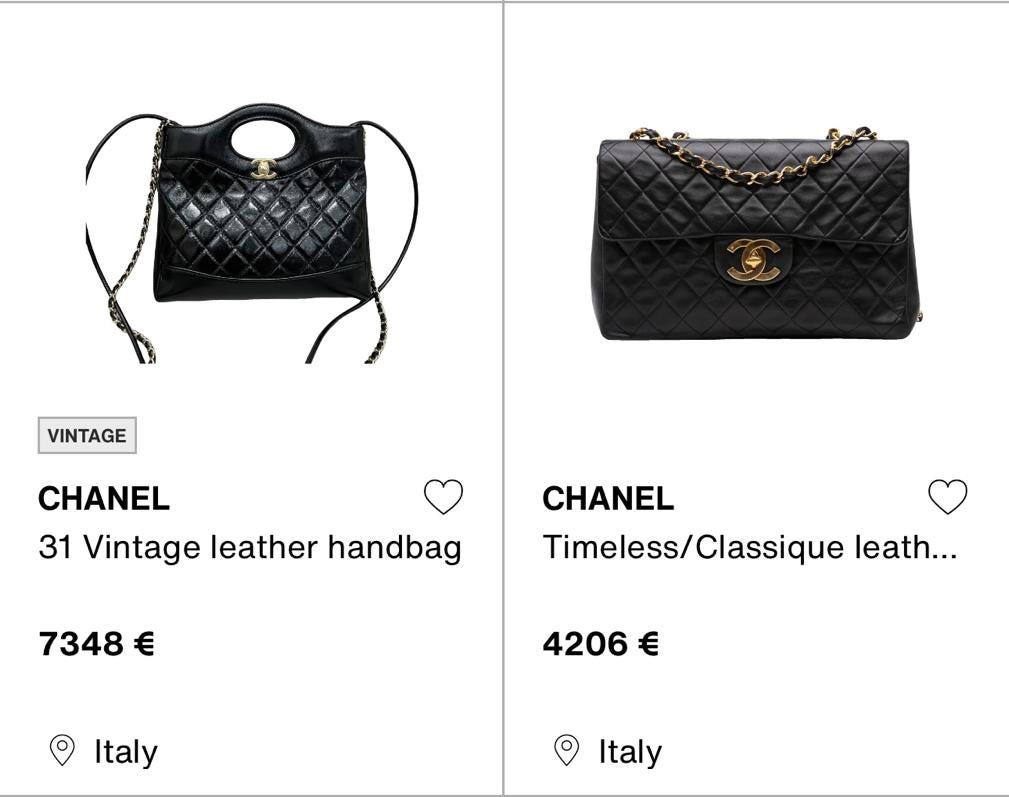
Imagine an upper-class woman who likes niche pieces, she doesn’t want to have the new classic Chanel 11.12 bag, she wants an archival Chanel bag that you find on TheRealReal because she wants to stand out within her own social circle.
Now image a low-middle class women who likes niche pieces, she doesn’t want to have the new tailored pants from ZARA she wants to have those ’90s low-rise tailored trousers with two buttons on the side that you find on Vinted from underground brands that everyone forgot but are cool af, because she wants to stand out within her own social circle.
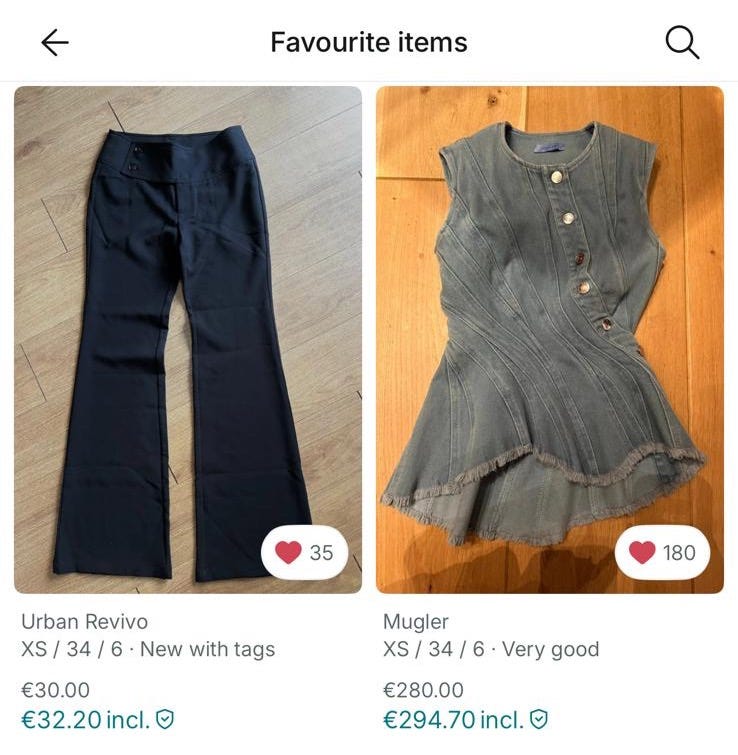
The circles are different, but the intention is identical.
When platforms sell multiple brands, narrowing their audience becomes complicated. In the end, it all comes down to which brands are allowed on the platform and the type of consumer that inevitably follows. So are this platforms socially divided? yes but not officially.
These platforms don’t explicitly assign class but they filter it, through brand restrictions, price expectations, and cultural codes, they quietly decide who belongs where. What looks like choice is often just access dressed up as taste.
What’s interesting is that the desire underneath is the same across all three platforms: to own something that signals individuality within a social circle. The difference isn’t intention, it’s permission.
Second-hand fashion likes to present itself as democratic, but even here, hierarchy survives.
xo,
Joana
such an interesting read, thanks for sharing :)